
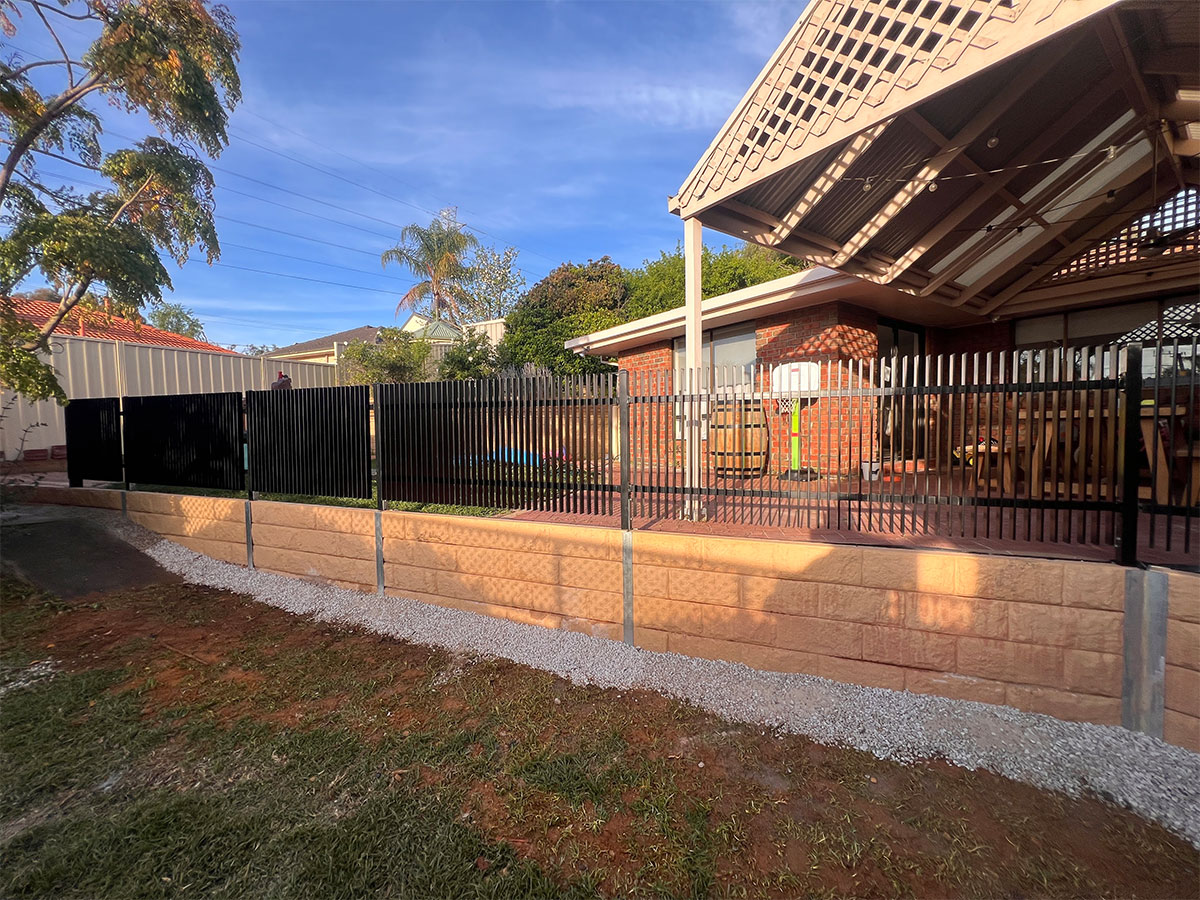
Quick answer: A retaining wall is a structure that holds back soil to create a difference in ground level. On a sloping block it turns unusable slope into flat, level areas you can walk on, plant, pave or build on, and it stops that soil washing downhill every time it rains.
If you have a sloping block, you have probably already been told you need one. What is less often explained is what the structure is actually doing, and why the alternative is usually worse and more expensive.
This guide answers the question in plain terms, then covers what these walls solve on Adelaide blocks specifically, from foothills slopes to reactive clay soils across the metro area.
1.0m
Height That Triggers SA Approval
2
Jobs Every Wall Does
Res + Com
Residential & Commercial
Free
No-Obligation Site Quotes
Defining a Retaining Wall in Simple Terms
Picture a garden bed with soil piled up behind a row of sleepers. Scale that up and the principle does not change. On one side the ground is higher, on the other it is lower, and the wall holds that difference in place.
So what is a retaining wall really doing? The part people underestimate is the force involved. Soil is heavy, and saturated soil is considerably heavier. A wall that looks decorative from the front is resisting constant sideways pressure from behind, every day, for decades.
What Separates a Wall From a Garden Edge
- A garden edge holds mulch and defines a border. It carries almost no load.
- A retaining wall holds back a genuine change in ground level and needs footings, drainage and, above a certain height, engineering.
- The dividing line is roughly where the soil behind would slump or wash away if the structure were removed.
The Adelaide Approval Threshold
In South Australia, retaining walls over 1.0 metre in height generally require development approval. Several other conditions can trigger it below that height too.
Confirm With Your Council If:
- The finished wall will stand over one metre in height.
- The wall sits on or close to a property boundary.
- Anything structural sits above the wall as a surcharge load.
- The build alters how stormwater moves across your block.
Managing Sloped Blocks in Adelaide
A slope becomes a problem when it makes land unusable, sends water toward the house, or gets steep enough that soil starts moving. Retaining turns a slope into a series of level areas that each do something useful.
Adelaide has a lot of sloping ground. The foothills suburbs climb steadily, the Hills are steeper again, and even flat looking suburban blocks often carry a metre or more of fall from front to back once you measure properly.
Terracing: two or three shorter walls stepping up a slope, rather than one tall wall doing all the work. Usually cheaper and often avoids the engineering threshold.
Cut and fill: soil removed from the high side is used to build up the low side, creating a level pad in the middle without importing material.
Level changes with steps: walls and stairs designed together so the transition between levels is safe, comfortable and looks deliberate rather than added later.
Preventing Soil Erosion
The second job a wall does is hold soil in place. On an unretained slope, every heavy rain moves a little material downhill, slowly enough that you may not notice for years until the damage is obvious.
Ask what is a retaining wall for and erosion control is the second answer. Adelaide’s reactive clay soils make this worse. Clay swells when wet and shrinks when dry, so the ground is moving seasonally even without rain events. Over enough cycles that movement destabilises anything sitting on top of it.
What a Properly Built Wall Stops
- Topsoil washing off garden beds and away from plant roots.
- Water channelling across the block and pooling against footings.
- Slumping and settlement where fill has been placed without support.
- Undermining of paths, paving and driveway edges over time.
The drainage built into the wall matters as much as the wall itself. Agricultural pipe, free draining aggregate and geotextile fabric behind the structure relieve water pressure and stop the wall becoming a dam.
Slope Costing You Usable Land?
Have the Levels Planned Before Anything Is Built
We assess slope, soil and drainage on site, then quote the work in writing. Free site visit, no obligation.
Creating Usable Flat Land for Gardens or Patios
This is the reason most people actually build one. A slope is land you own but cannot really use. Level it and you get something back that adds both function and property value.
- Lawn and play space that children and pets can actually use.
- Outdoor living areas, whether that is decking, paving or a paved courtyard.
- Garden beds at a workable height, often with the wall doubling as informal seating.
- Vehicle and shed access where the ground previously fell away too sharply.
- Pool surrounds, which need level ground and often need retaining to get it.
Properties with failing or absent retaining walls consistently attract lower valuations and sell for less. A quality wall pays for itself in added usable land and kerb appeal, which is worth weighing against the upfront cost.
Where the new level area becomes an outdoor living space, paving and the retaining are best planned together so levels, falls and surfaces resolve as one scheme.
Local Examples of Retaining Walls
Walk around most Adelaide suburbs and you will see the same handful of solutions repeated, because they suit the local soil, slope and access conditions.
If you still want a clearer sense of what is a retaining wall in practice, the examples are all around you.
Common Across Adelaide
- ✅ Concrete sleeper walls along rear boundaries.
- ✅ Timber sleeper garden terraces in front yards.
- ✅ Stone and block feature walls in established suburbs.
- ✅ Multi-tier systems through the foothills.
What Changes the Choice
- ⚠️ How much level change you are dealing with.
- ⚠️ Whether the soil is clay, sand or rock.
- ⚠️ How machinery can reach the site.
- ⚠️ What the finished space needs to look like.
Designed for Your Conditions
Adelaide Landscaping Group assesses slope, soil and drainage before recommending an approach, rather than applying the same wall to every block. Licensed and insured under BLD 179371, with more than 15 years building walls across Adelaide.
So, what is a retaining wall? It holds back a change in ground level, stops soil moving, keeps water where it should be, and gives you flat ground you can actually use. Built properly, with real drainage and the right footing, it is one of the few landscaping investments that adds usable land rather than just decorating what you already have. To talk through what your block needs, contact our team for a free site visit.
