
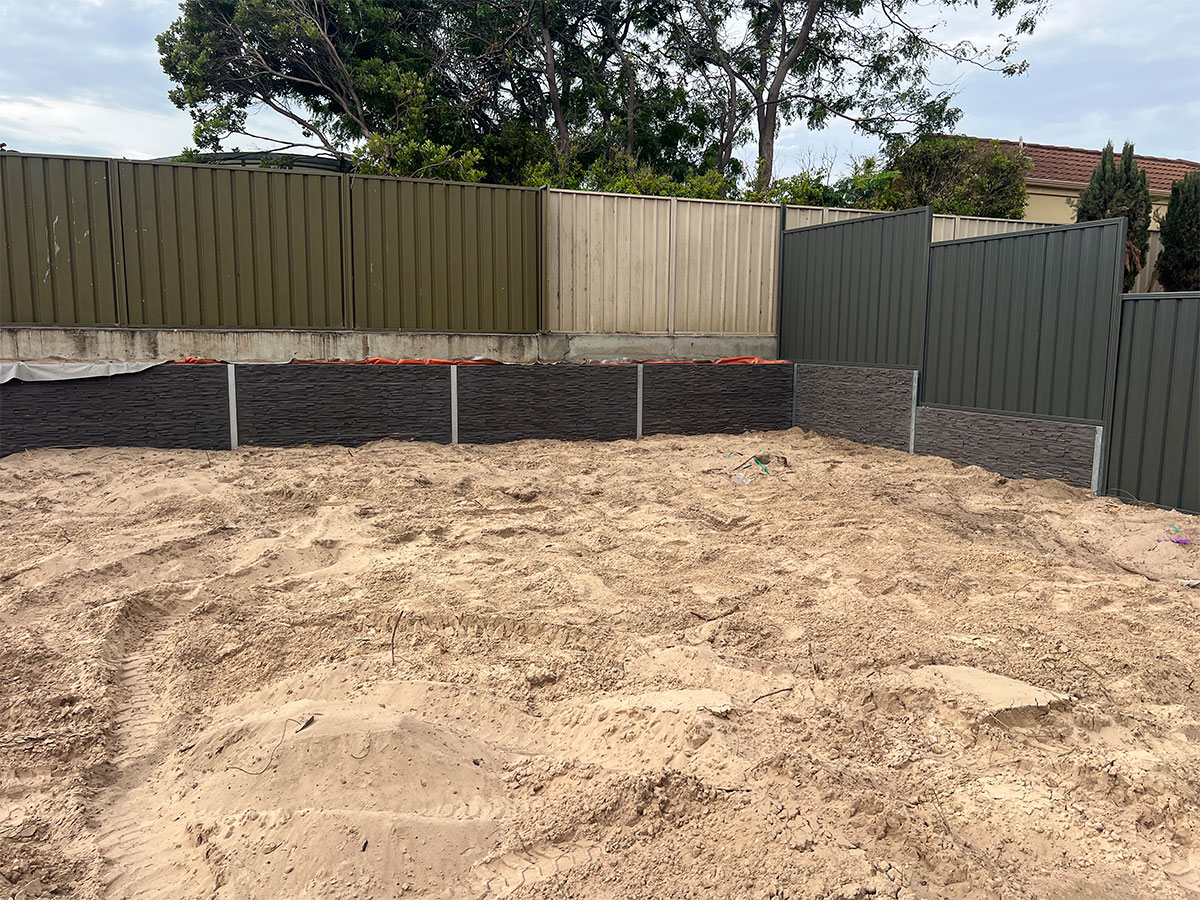
Quick answer: Responsibility generally depends on the excavation or fill that created the retaining need and who benefits. The wall’s location alone does not decide who pays. Start with your property survey, then talk to your neighbour, and get legal advice before it escalates.
It is one of the most common questions we get asked on site, and usually it arrives after the wall has already started leaning. Two neighbours, one wall, and no clear agreement about who pays to fix it.
This guide covers how responsibility is generally worked out in South Australia, what to establish before the first conversation, and the point at which the matter needs professional advice rather than goodwill.
Council
Check Approval Requirements
Step 1
Always Start With the Survey
Written
Get Any Agreement Recorded
Free
No-Obligation Site Quotes
Please Note
This article is general information for Adelaide homeowners, not legal advice. Every boundary situation turns on its own facts, titles and history. For advice on your specific circumstances, speak with a qualified legal practitioner. Ask council about development approval, not the allocation of costs.
Legal Principles for Boundary Walls in South Australia
Check changes to natural ground levels, including previous owners’ work, and the benefit each property receives.
Who is responsible for a retaining wall rarely has a single clean answer, but a few principles shape most situations.
Where the Wall Physically Sits
A survey establishes the boundary, but location alone does not determine maintenance responsibility. A benefiting owner may be responsible even when the wall stands on the neighbour’s land. See the SA Legal Services Commission’s retaining-wall guidance.
Who Created the Change in Level
If one owner excavated to create a level building pad, or imported fill to raise their yard, the retaining need was created by that work. Responsibility often follows the party whose actions made the wall necessary.
Where Both Properties Benefit
Where a wall genuinely supports land on both sides and both owners benefit, shared responsibility for maintenance and replacement is a common outcome. Shares depend on the benefit received, rather than automatically being equal. Record any agreed allocation in writing.
- Fencing and retaining are treated differently, even when the two structures sit together.
- A wall built as part of a subdivision may carry conditions attached to the original development approval.
- Older walls often predate current owners, which is why the paper trail matters more than memory.
Checking Your Property Survey
Before any conversation with a neighbour, establish the facts. Nearly every boundary dispute involves at least one party who is confident about a line that turns out to be somewhere else entirely.
Working out who is responsible for a retaining wall starts with evidence, not opinion. These five steps convert an argument into a measurement.
- Find your certificate of title and plan. These show the legal boundaries of your allotment as registered.
- Commission a licensed surveyor if there is any doubt. A surveyor can physically mark the boundary on the ground.
- Check for easements and encumbrances. These sit on the title and can affect what may be built where.
- Look for development approval records. Council records may show who was responsible for constructing the wall.
- Photograph the current condition. Date stamped photos of cracking, leaning or drainage failure are useful whichever way the matter goes.
Consulting With Your Neighbour
Most of these situations are resolved over a fence rather than in a tribunal, and the tone of the first conversation usually determines which way it goes.
A leaning wall is a shared risk before it is a shared cost. Leading with that framing, rather than with blame, tends to produce a far better outcome for everyone involved.
What Helps the Conversation
- ✅ Bringing the survey, photos and a written quote.
- ✅ Getting more than one quote so the figure looks real.
- ✅ Putting scope, cost split and timing in writing.
- ✅ Keeping a record of all correspondence.
What Makes It Harder
- ⚠️ Opening with blame rather than the problem.
- ⚠️ Guessing at the boundary instead of surveying it.
- ⚠️ Verbal agreements with nothing recorded.
- ⚠️ Rebuilding without fixing the original drainage fault.
It is also worth being clear about what the work involves. A wall that failed because of poor drainage will fail again if it is rebuilt without drainage, and neither neighbour wants to fund the same job twice.
Need Evidence for the Conversation?
Get a Written Assessment of the Wall
We assess the condition, the drainage and the likely cause, then quote the remedial work in writing so both parties are looking at the same figure.
When to Seek Legal Advice
Some situations move beyond a neighbourly conversation. A short conversation with a legal practitioner early is almost always cheaper than a prolonged dispute later.
The question of who is responsible for a retaining wall stops being a neighbourly one at a fairly predictable point. Consider getting professional advice when any of the following apply.
- The neighbour disputes the boundary position even after a survey.
- There is disagreement about who caused the change in ground level.
- The wall is failing and there is a genuine safety risk to people or property.
- One party wants to build something new that requires retaining on the boundary.
- Substantial cost is involved and no agreement can be reached on the split.
- The property is being sold and the wall’s condition affects the sale.
Ask council whether approval is required before work starts. The overall retained level difference matters; walls retaining one metre or less can still require approval in some locations.
Licensed South Australian Builder
Adelaide Landscaping Group is licensed under BLD 179371 and insured. We provide written assessments and itemised quotes that both parties can work from, and we handle the permits and documentation where a rebuild is required.
Establish the boundary with a survey, work out whose excavation or fill created the retaining need, then approach the conversation with facts and a written quote rather than an opinion. Where both properties benefit, expect a shared arrangement to be the likely landing point. And get proper legal advice before a disagreement about a few thousand dollars becomes something considerably more expensive. For a written assessment, contact our team.
